

Niceness Is Not Kindness + Green Socca Flatbreads
Easy high-protein, high-fiber (GF and vegan) flatbreads, plus trading niceness for kindness.

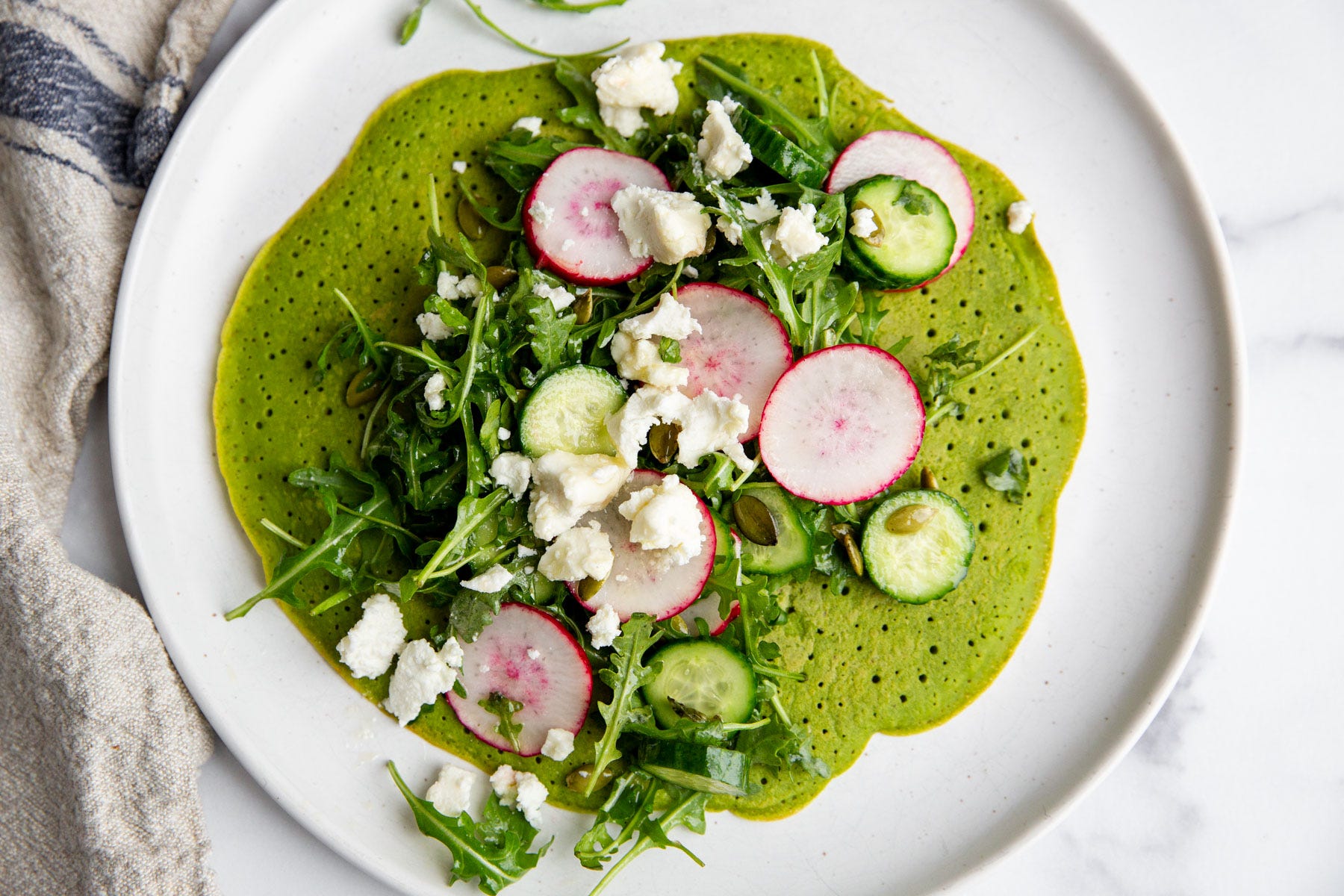
What if niceness isn’t actually a virtue? That question—plus a week in Ireland and a recipe for the easiest grain-free flatbreads (made with an ingredient that might surprise you)—all in today’s post.
Hello my loves,
I recently spent a week in Ireland on a retreat, and, as I shared here, I suspected the trip would change me, but I couldn’t have imagined just how much. It’s hard to put into words, but it felt like an internal unveiling: the trip brought me closer to myself, exposing some deeper truth of who I am. I feel wider, deeper, more nourished than I have in ages. More in my body, more integrated in spirit.


It was a spiritual retreat, and we spent most of our days outside—in the rain, wind, and occasional sun—exploring sacred sites throughout the southeast of the island. The beauty of the land repeatedly took my breath away (my photos don’t do it justice). The land is alive and nurturing; it communicates to you, if you’re open to it. The sites we visited were thousands of years old—places people have come for millennia to connect with body, mind, and spirit. From the outside, some seemed entirely unassuming: rock formations on the side of a farm, bubbling wells off a country road, waterfalls along a gentle stream—but when greeted with intention, they gradually revealed their power. I can still feel it—nurturing but strong, poignant but kind.
A few weeks before I left, I was feeling blocked and stuck in my body. One morning, sitting in meditation, clenched in my belly, feeling like I was holding onto something for dear life but having no idea what it was, I asked my inner voice: What is this? What am I supposed to let go of?
Immediately, without pause, I heard: “Niceness.”
What? My mind was completely taken aback. Isn’t niceness a good thing?
But then, like the thud of a stone on pavement, I heard—or felt (it’s strange how these things translate): “Niceness is not the same thing as kindness.”
I had to sit with that. It stumped me completely. But slowly I could feel it—how niceness is like a mask I put on. Protection. Something I wear to fit in, or to mask my power and weirdness and light. Niceness as a way to appease and please, to avoid making others—but mostly myself—feel uncomfortable.
Kindness, on the other hand, feels different. Honest. Authentic.
Later that day, I looked up the etymology of “nice.” Its Latin root is nescius, meaning—get this—ignorant. My jaw dropped to the floor.
It evolved from meaning “foolish” in the 13th century, to “delicate” in the 15th, and finally “agreeable” by the 18th century.
Niceness is not the same thing as kindness
It’s time to let go of niceness. Now is not the time to be agreeable. Now is the time to be in our power.
(Worth noting: the word "kind" comes from the Old English word for kin—nature, family, one's own people. To be kind, etymologically, is to treat others as your own. Niceness comes from ignorance; kindness comes from kinship.)
Practicing kindness instead of niceness isn’t always easy. It requires us to first be true to ourselves—honest about who we are, willing to strip away the masks we wear to appease others or smooth over the moment. A few days after my meditation, I found myself babbling to an acquaintance in an effort to be nice, only to get in my car feeling completely exhausted. I had put on a mask to make the situation feel agreeable—and instead of feeling good, I felt depleted. Looking back, I can see I had lost my center. A few simple, kind words would have been enough.
Real kindness comes from authenticity—from being rooted in our truth. It requires courage: sometimes the kindest thing we can do is say the hard thing, or say nothing at all. Whereas niceness takes us out of our power, kindness is rooted in it.
It’s like those sacred sites in Ireland—beautiful and nurturing, yes, but also potent. A far cry from a resort beach bumping Jimmy Buffett with cocktail umbrellas. These are places that are open, raw, and undeniably true. Not always easy, but far more meaningful.
As my friend Jerrelle Guy (author of We Fancy and publisher of The Dinner Ritual), shared in a recent chat thread, “whenever I find myself performing niceness my heart has already checked out of the conversation.” (Stay tuned, Jerrelle will be on the podcast soon). This week, let’s drop the niceness, my loves, and keep our hearts fully in it.
If you appreciate today’s newsletter, could you click the heart in the upper corner? It lets me know you’re here and helps spread the love. ❤️
The recipe
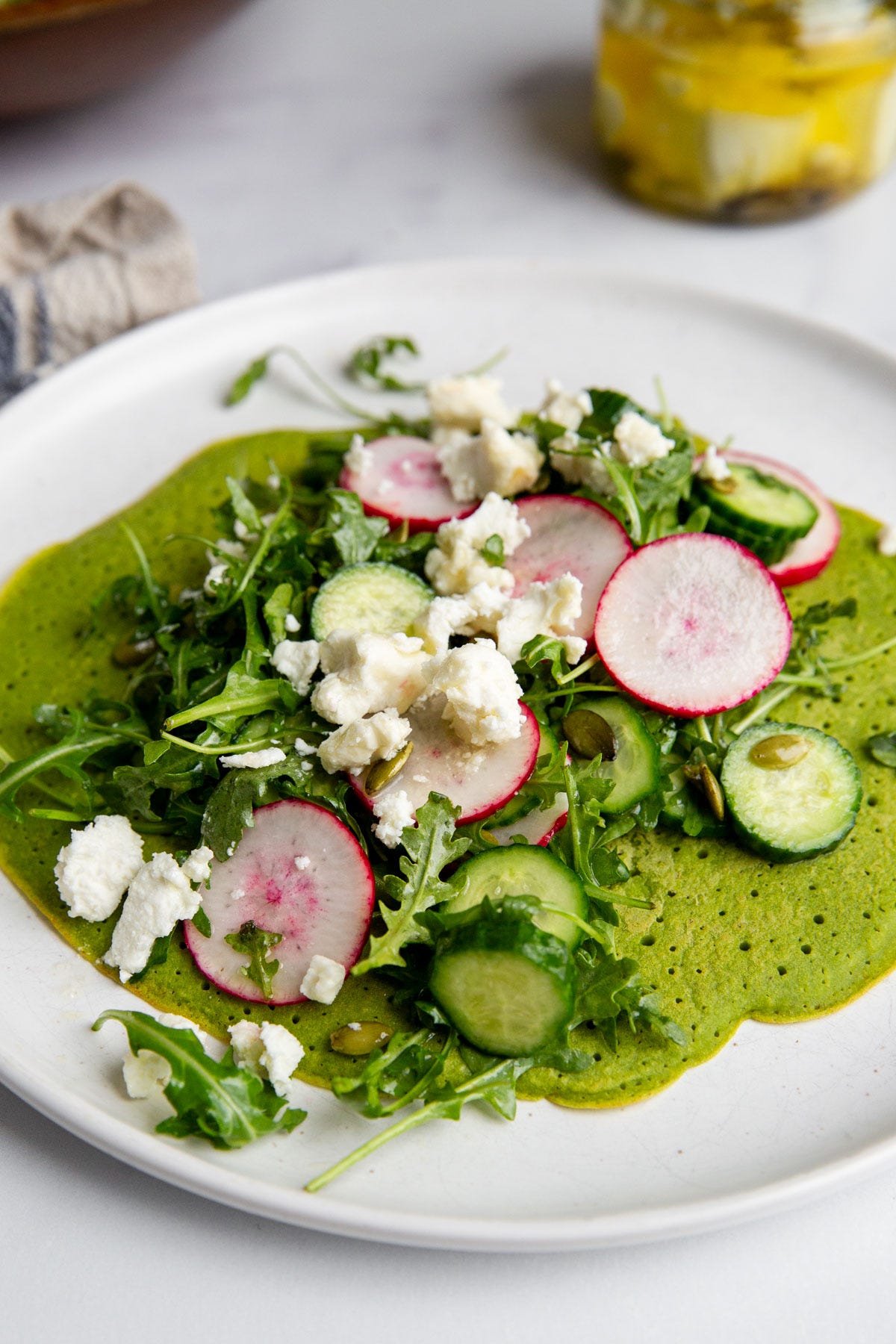
All of this has me thinking about nourishment in its truest form—not the dressed-up, people-pleasing kind, but the real thing. Here’s a recipe that embodies exactly that using simple, whole ingredients. It’s a dish I’ve been making for my own pleasure, enjoyed mostly alone, for lunch.
It was inspired by my Substack live with Ellie Krieger, where we talked about the benefits of chickpea flour (high fiber, high protein, made from just ground chickpeas). She mentioned she had made the Socca Flatbread Pizza recipe from my book, Mind, Body, Spirit, Food (she also shared the recipe in her Washington Post column), and I started to think about other ways I use chickpea flour.


I had developed a version of these socca flatbreads years ago, but had forgotten all about them. I dusted off the recipe, made some updates, and have been loving them as a lunch staple ever since. Traditional socca (which hails from the south of France) is made with just chickpea flour, water, and olive oil, but for these flatbreads I add spinach, dried Italian seasonings (which I always have on hand), and a touch of lemon juice and sugar for more flavor.


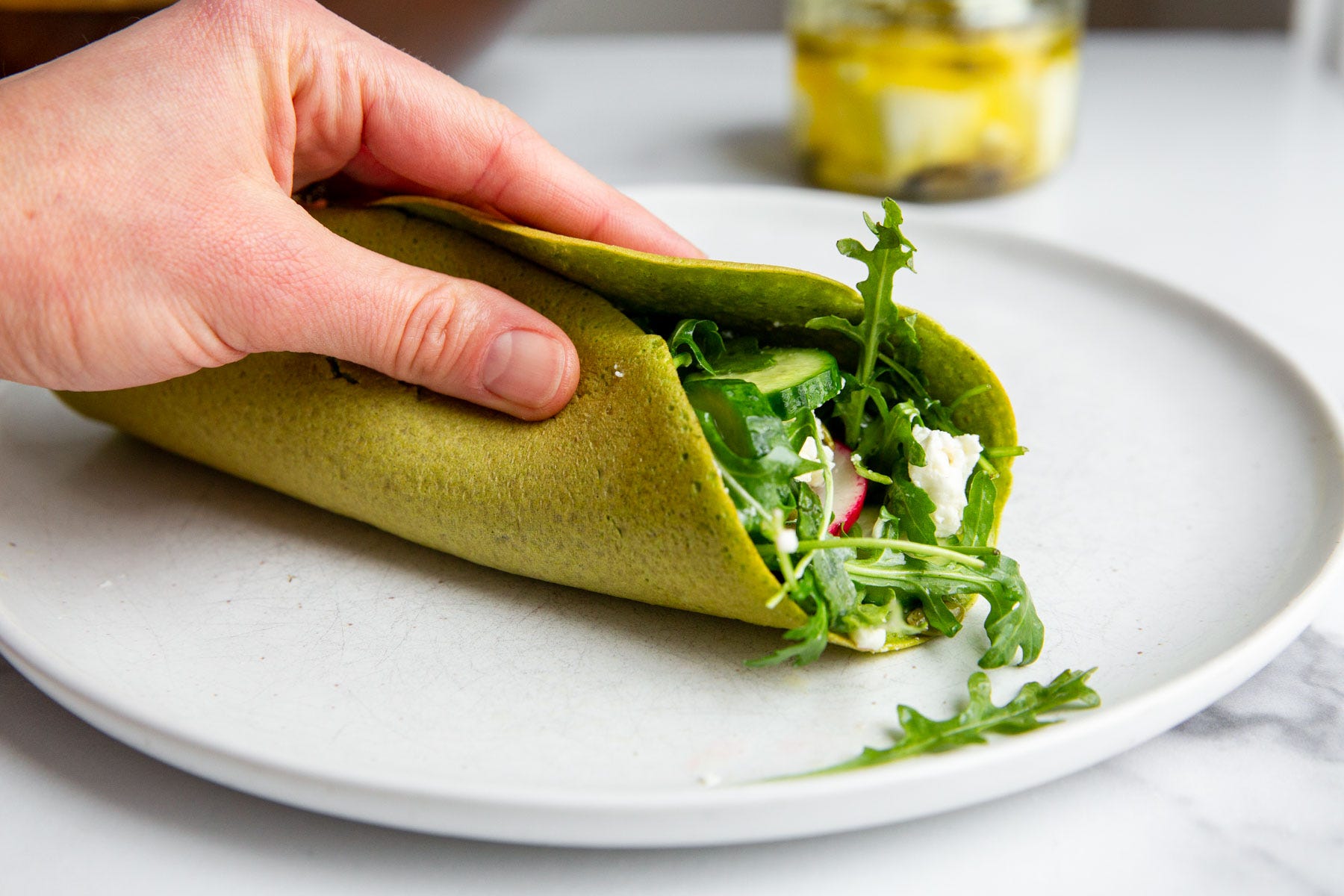
While decidedly different from regular bread (these are made with just chickpeas, after all), they’re satisfying, nutritious, and fun to eat. When first cooked they’re tender and pliant, and my favorite way to eat them is to pile a simple salad on top (using whatever I have in my fridge) and fold up the edges like a giant wrap. You can also freeze them for quick meals down the line (after frozen they’re more of a knife-and-fork situation, but I like tearing of pieces and using them to pick up salad, much like you would with naan bread and curry).
I hope they bring you joy. A small act of nourishment, just for you.
More Recipes I’ve Been Making Lately
Raspberry Pistachio Scones (I recently riffed on this technique to make shortcakes—the recipe is coming next week!)
Below you'll find a downloadable PDF of the recipe, a text version, and a video. For access to all recipes, classes, and more, consider becoming a paid subscriber—and thank you, truly, to those who already do. You make this work possible.
